
Operators drive solutions that reduce waste
Through strong commitment and practical problem-solving, operators at Kubikenborg Aluminium AB have developed a way of working that both reduces waste and saves significant amounts of money.
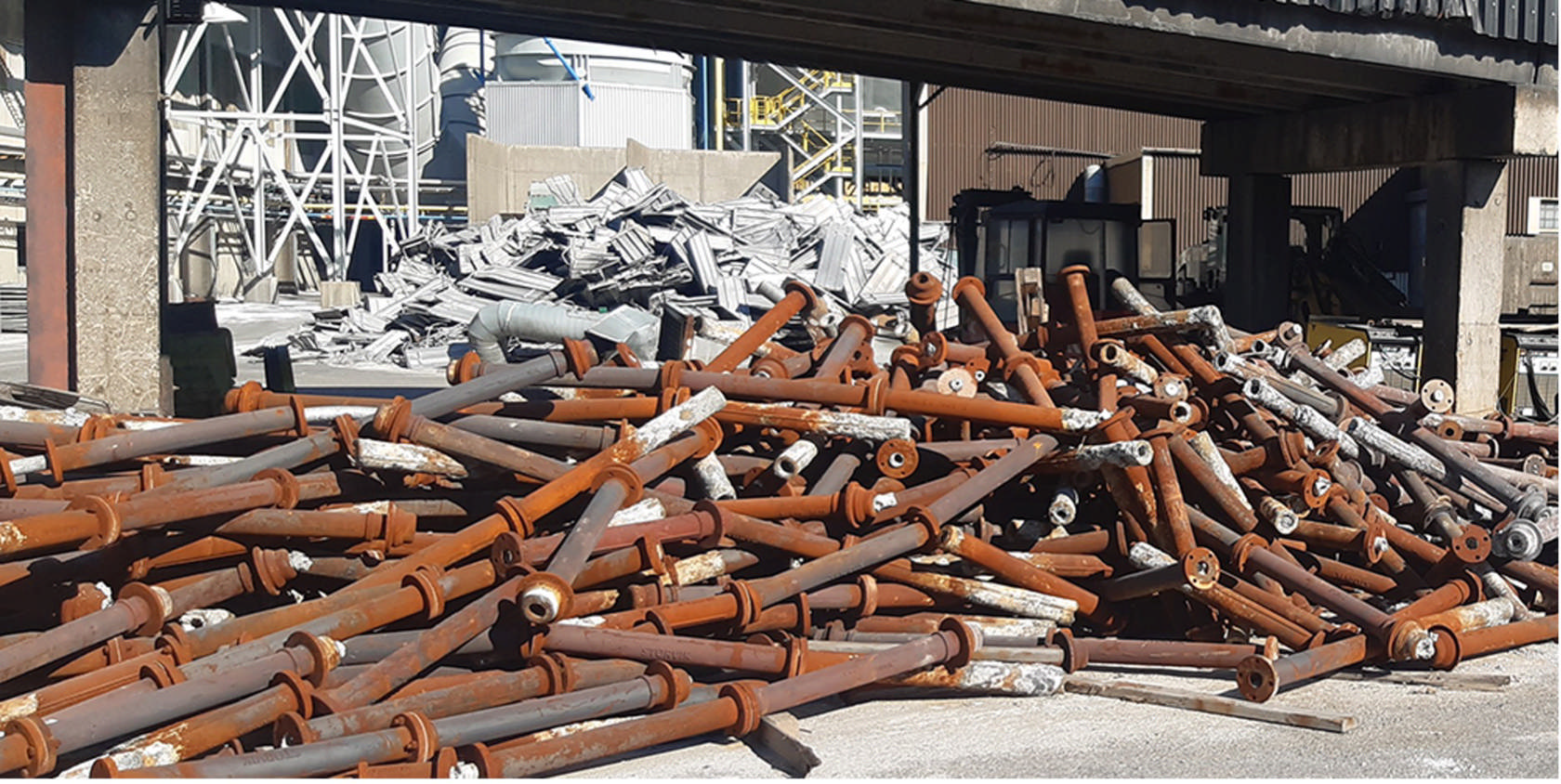
By recycling used tapping pipes – which were previously sold as scrap iron – the operation has taken another important step towards more sustainable and resource-efficient production.
Work on recycling tapping pipes began as early as 2000, but gained new momentum in 2019 when operators took the initiative to develop a practical and long-term process.
Since then, they have step by step built a method for cleaning, emptying by melting, storing and reusing the pipes in production.
Operator-driven development of the entire process
Since 2021, the focus has been on reducing the high consumption of tapping pipes and managing the large stock of used pipes that has built up over time.
The operators have:
- developed new instructions, work procedures and risk assessments
- cut and processed stored pipes for further handling
- updated the ladle dryer software to efficiently melt out metal residues
- replaced old equipment and invested in, among other things, a new saw and overhead crane for improved ergonomics
- trained and informed colleagues and shift supervisors to ensure sustainable ways of working
“The collaboration has worked very well throughout the process. Without the commitment of the operators and shift supervisors, this process would not have been possible to implement and carry out,” says a trainer in Electrolysis.
He also emphasises the importance of following routines to prevent new stocks of used pipes from building up.
Multi-million-krona savings and reduced waste
The results are clear. Up to 2020, around 1,000 pipe parts were purchased annually at a cost of approximately SEK 1.4 million. Thanks to recycling, purchases have decreased sharply — and since October 2023, no new pipe parts have needed to be purchased.
Today, there is a stock of around 700 recycled pipe parts, covering demand for several years ahead. At the same time, the amount of waste has decreased significantly.
Next step: even more sustainable solutions
Work is now continuing to develop a similar process for cleaning and reusing the blow pipes in the tapping vehicles. This is expected to deliver further efficiency gains and cost savings — and is another example of how the operators’ commitment drives sustainable development in the business.